Not all preservatives are bad. Brands that offer natural formulation add organic stabilizers to their skincare line.
As a skincare brand owner, you want to offer your customers high-quality, organic products. You want to keep your products effective and free from harmful chemicals, but preservatives are necessary to prevent contamination.
But with the rise of organic skincare, you need to choose the right organic preservatives that will protect your formulations without compromising the purity and safety your customers expect.
Today, we’ll help you understand how to choose the best preservatives to keep your cosmetics safe and stable while staying true to your brand’s values.
Preservatives are indispensable in skincare formulations, particularly for products containing water. Without the right stabilizers, even the most carefully developed formulations can become breeding grounds for harmful bacteria, mold, and fungi. These microorganisms pose serious health risks to consumers, which makes the use of preservatives essential for product safety.
Preservatives prevent microbial growth, which can otherwise lead to contamination. Water-based formulations, such as lotions, creams, and serums, are especially vulnerable to microbes.
Without stabilizers, cosmetics would degrade rapidly and can potentially cause irritation, allergic reactions, or infections. Natural preservatives derived from plants or other bio-based sources offer a safer alternative to synthetic ones while still providing the necessary protection to keep the natural formulation stable.
Many active compounds in skincare, such as vitamins, antioxidants, and oils, are sensitive to environmental factors like air, light, and heat. Preservatives protect these ingredients from degrading or losing their potency. Without stabilizers, a product may lose its efficacy before it even reaches the consumer, which would ultimately damage your brand’s reputation.
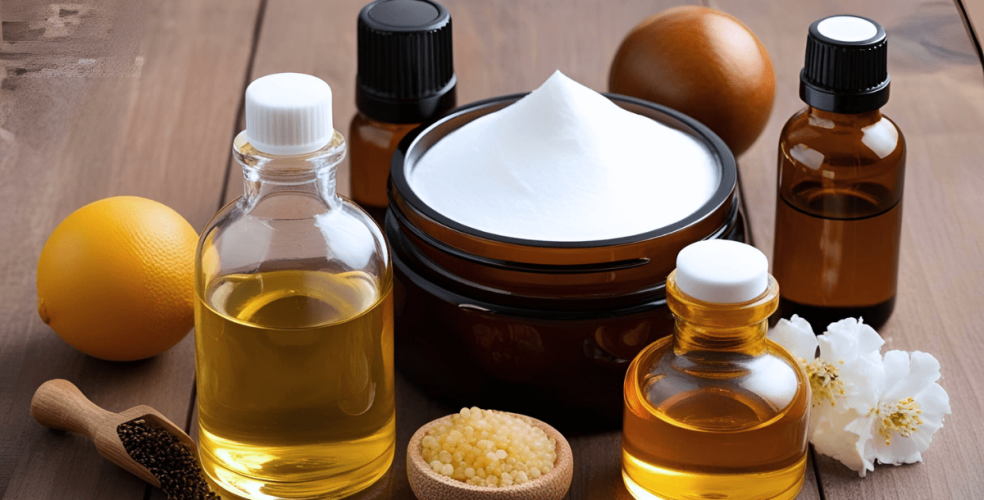
An organic preservative is derived from natural sources and is free from synthetic chemicals. To be classified as one, preservatives must meet specific criteria that confirm they are plant-based or otherwise naturally sourced.
Plant-Derived Ingredients | Sourced from plants like essential oils and plant extracts. Provide effective antimicrobial properties while being gentle on the skin. |
Non-Synthetic | Free from synthetically produced chemicals, unlike parabens or phenoxyethanol—which are not considered organic despite their widespread use. |
Certified Organic | Carry USDA Organic certification for organic sourcing and processing. |
Organic Certifications | Preservatives that are ECOCERT, KOSHER, COSMOS, and FDA compliant. |
A natural stabilizer derived from the fermentation of radish roots by Leuconostoc kimchii, a lactic acid bacterium traditionally used in kimchi production. This fermentation process releases peptides with antimicrobial properties that prevent microbial growth to protect skincare products.
Form | Clear or pale yellow liquid with antimicrobial peptides. |
Ideal Uses | Present in conditioners, facial lotions, hair masks, hydrating serums, and firming serums. |
Properties | Water-soluble, skin-conditioning, and protective against microbial contamination |
Concentration | Typically used at 0.4% to 4%, depending on the product. |
GSE is a natural antioxidant derived from the seeds and pulp of grapefruits. Rich in phytochemicals like flavonoids, Vitamin C, and Vitamin E, it serves as a stabilizer with potent antimicrobial, antifungal, and antibacterial properties. GSE prevents the growth of harmful microorganisms in skincare products to extend their shelf life. This is particularly useful in water-based formulations.
Note: In some cases, GSE must be mixed with a commercial stabilizer to achieve full-spectrum protection.
Derived from the Rosmarinus officinalis plant. It is a natural antioxidant and preservative that protects the skin and preserves cosmetic formulas. Rosemary extracts contain compounds like rosmarinic acid, caffeic acid, and carnosol, which neutralize free radicals and support skin health. While the extract provides antioxidant benefits, it also aids in reducing the need for synthetic stabilizers.
Note: It is paired with stabilizers like sodium benzoate and potassium sorbate in some skincare products, such as exfoliants and beard soaps.
Tocopherol, an active form of Vitamin E, is a pale yellow liquid that acts as an antioxidant, which shields the skin from UV rays and environmental damage. It’s also a preservative to prevent the products from going bad. Tocopherol is commonly used in sunscreens, moisturizers, makeup, and hair care.
Although a mild preservative, potassium sorbate has antimicrobial and antifungal properties. Widely utilized in cosmetics and personal care products to avert the growth of mold, yeast, and fungi. If you’re looking for something gentle compared to parabens, potassium sorbate is popular in natural and clean beauty products.
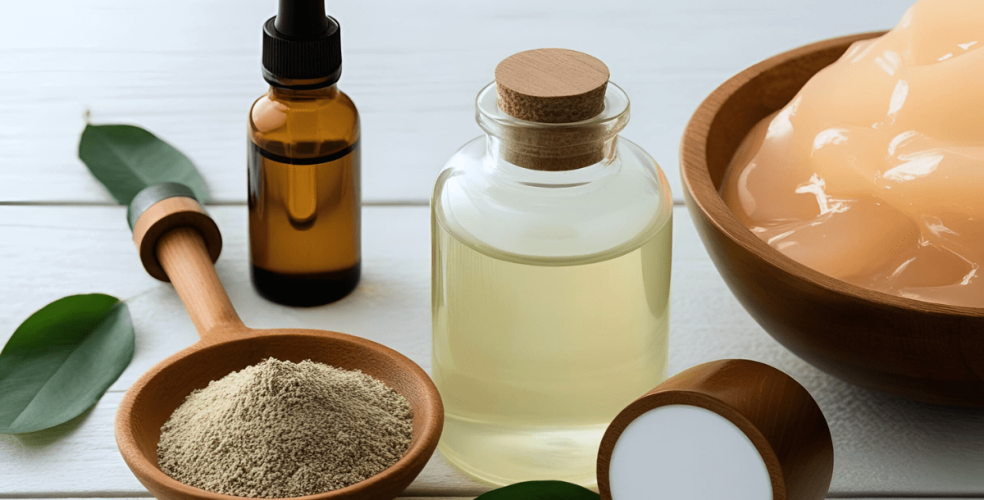
We need to consider several factors to guarantee optimal preservation and product effectiveness:
There is no one-size-fits-all preservative, especially with natural ones. Each has its limitations. When choosing a natural stabilizer, focus on one at a time. Asking for a broad-spectrum preservative for all your products can lead to vague advice, which may not work well for you.
Test stabilizers but prioritize the one with the highest importance. Your product’s type influences the preservative choice, especially with legal limits. Consider questions like:
Contamination occurs in the water phase or at the water/air or water/oil boundary of a product. For a stabilizer to work, it needs to include water-soluble ingredients.
When making a water-based product like a toner, the stabilizer should be fully water-soluble, or you’ll need a solubilizer to mix it in. It’s important to ensure the stabilizer works at the right pH for solubility.
Most natural stabilizers are weak acids, such as salicylic acid, benzoic acid, and sorbic acid. These acids are not easily soluble in water, so they are often used as salts (i.e., sodium benzoate) but only work effectively in their acid form.
The product’s pH and how you add the preservative are key to its effectiveness. For example, a stabilizer for an alkaline product (like a hair relaxer) can’t be used in an acidic formula (like a chemical peel).
If the pH is too low, the stabilizer may become ineffective or destabilize the product. If it’s too high, it won’t work at all. Make sure the preservative’s ideal pH matches your product’s pH before use.
Some cosmetic ingredients, like surfactants, hydrosols, and plant extracts, are already preserved. Before making your product, it’s important to know how much preservative is in these ingredients. The natural stabilizer you choose must work well with what’s already there. You also need to be aware of the legal limits for each preservative.
For example, if your hydrosols and extracts contain benzoic acid, and you want to add a stabilizer like sodium benzoate, you must consider the legal limits. In the EU, the maximum amount of benzoic acid allowed is:
Make sure the total amount of benzoic acid and sodium benzoate in your formulation doesn’t exceed these limits.
When choosing a natural stabilizer, consider its recommended dosage. It’s not always a simple 1%; dosages can range from 0.8% to 4%, depending on the stabilizer.
These dosages are usually based on the supplier’s advice, but you should test and adjust the amount based on packaging, application method, and other stabilizers in the formula.
Selecting the right organic preservatives ensures your skincare formulations are safe and effective. Partnering with an experienced cosmetic manufacturer like Medpak Solutions helps you navigate preservative choices to guarantee the quality and compliance of your organic cosmetics brand.
Your Most Frequently Asked Questions About Natural Formation Skincare
They are usually considered better for those seeking pure ingredients, as they avoid synthetic chemicals. They may be gentler on the skin and environmentally friendly, but their effectiveness can depend on the specific formulation.
They can be worth it for those looking for eco-friendly and chemical-free skincare. They inherently feature pure ingredients that are better for sensitive skin. However, they can be pricier, and results may vary based on individual skin needs.
Formulating beauty products without stabilizers is risky, especially for water-based formulations. Stabilizers are essential for maintaining safety and extending shelf life, particularly in plant-based formulations.
The only way to know is through testing. Bacteria can’t be seen with the naked eye. Just like water can look clean but still be contaminated, your formulation may seem fine but still contain harmful bacteria.