
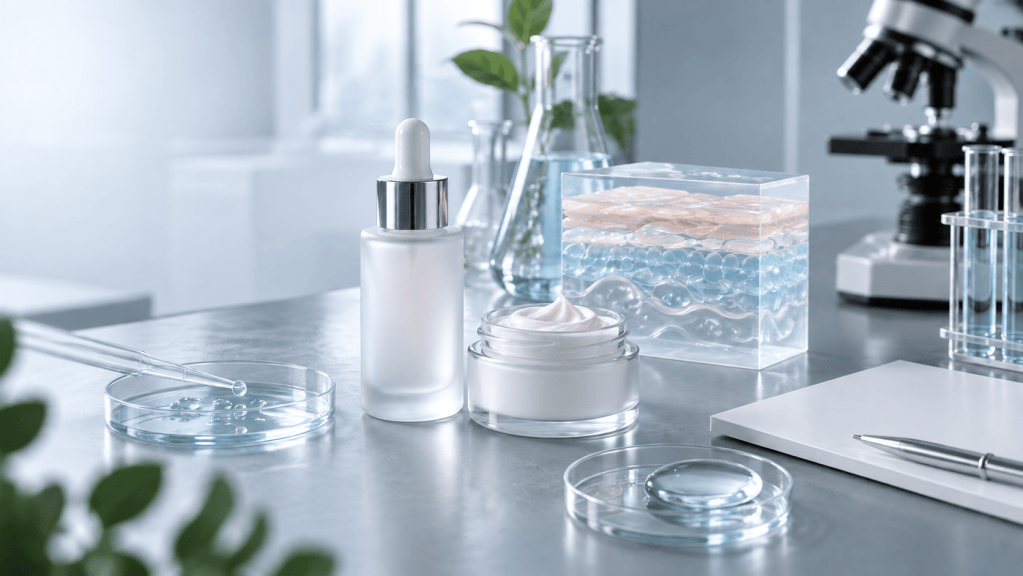
“Barrier-supporting” skincare has become a familiar product-development brief, but the phrase only becomes useful when a team translates it into formulation decisions. The skin barrier is not a single ingredient target. It is a functional system shaped by the stratum corneum, skin lipids, hydration, surface chemistry and the way a finished formula interacts with the skin.
For beauty brands, that means skin barrier skincare formulation should start with a clear product objective rather than a trend-driven ingredient list. A moisturizer, cleanser, serum and mask can all be positioned around comfort or hydration, yet each format creates different challenges involving water retention, cleansing strength, pH, texture, preservation, packaging and claims.
The goal of this guide is to show product teams how barrier science can inform cosmetic formulation choices without turning cosmetic messaging into medical or therapeutic claims.
| Key takeaways for product teamsDefine the consumer need and product format before choosing “barrier” ingredients.Balance humectants, emollients and occlusive components based on the desired sensory profile and use case.Treat pH, surfactant system, preservation, fragrance and packaging as part of the barrier-support strategy—not as afterthoughts.Validate the finished formula through stability, compatibility and appropriate product testing rather than relying on ingredient reputation alone.Keep cosmetic claims focused on appearance, hydration, softness and moisture-loss support unless the product is being developed and regulated for a different intended use. |
A peer-reviewed review indexed by PubMed describes the skin barrier as a system with physical, chemical, microbiologic and immunologic dimensions. For cosmetic product development, the most actionable starting point is usually the outer stratum corneum: corneocytes embedded in a lipid-rich matrix that helps limit excessive water loss and protects the underlying skin from the external environment.
This is why a “barrier” brief should not automatically become “add ceramides.” Product architecture matters. A formula may support a well-hydrated, comfortable skin surface through a combination of water-binding ingredients, emolliency, occlusion, mild cleansing and a suitable finished-product pH.
MedPak’s existing article on dermatology-informed manufacturing insights discusses the importance of separating skincare facts from marketing hype. For product teams, the next step is translating sound skin science into a formula that can be manufactured, tested, filled and positioned appropriately.
Before choosing barrier support ingredients, define what the product is expected to do as a cosmetic and how the consumer will use it. A practical brief should answer questions such as:
These decisions affect the entire formulation system. A rich face cream can tolerate a different balance of emollients and occlusive materials than a lightweight daytime serum. A cleanser must solve a different problem again: remove soils and oils while controlling how aggressively the surfactant system interacts with the skin surface.
Moisturizing formulas commonly combine three functional approaches: humectancy, emolliency and occlusion. They are related, but they are not interchangeable.
| Function | What It Does in a Formula | Product-Development Consideration |
| Humectants | Help attract and retain water in the stratum corneum. | Choose levels and combinations that support hydration without creating unwanted tack or sensory drag. |
| Emollients | Help smooth and soften the skin surface and influence spreadability. | Select oils, esters and lipids based on skin feel, oxidation stability, compatibility and brand positioning. |
| Occlusive components | Help reduce moisture loss by forming a more protective surface film. | Balance barrier feel with consumer expectations for weight, shine, absorption and climate/use conditions. |
A 2026 PubMed-indexed review on skin hydration similarly describes humectants, emollients and occlusives as core categories used in moisturizing cosmetics. The practical formulation question is not whether one category is “best,” but how the blend performs in the complete product.
Read the 2026 skin-hydration review on PubMed.
Ceramides, fatty acids, cholesterol-like lipids and other emollient materials are often discussed in barrier-focused skincare. For a product developer, their value depends on more than whether an ingredient name appears on the label.
Consider the complete lipid phase: solubility, melting behavior, emulsifier system, processing temperature, oxidation risk, final texture and compatibility with the other ingredients. A technically elegant lipid story can still produce a poor consumer product if the cream pills, separates, feels excessively greasy or changes during stability testing.
The formulation objective should be a stable, manufacturable product with an appropriate sensory profile—not simply the longest possible list of “barrier” ingredients.
Skin surface chemistry is mildly acidic, and pH can influence ingredient stability, preservative performance, surfactant behavior and consumer tolerance. But that does not mean every skincare formula should be pushed to the same target number.
Product teams should establish a target pH range based on the formula, intended use and technical requirements. During development, check whether the pH remains within specification after manufacturing and throughout stability testing. If the formula contains pH-sensitive actives, polymers, preservatives or surfactants, those interactions should be evaluated as part of development rather than after the formula has already been approved.
Cleansers deserve special attention because surfactants are designed to interact with oils and soils. Research summarized in a PubMed-indexed review on cleansing formulations notes that surfactants can also interact with components of the stratum corneum. Formulation strategies can reduce these interactions while still providing effective cleansing.
For a barrier-conscious cleanser brief, evaluate the surfactant blend as a system. Important variables can include surfactant type, concentration, micelle behavior, pH, polymers, humectants, rinse profile and the amount of cleansing expected from the product.
The practical goal is not “surfactant-free” by default. It is to create the level of cleansing the consumer expects while managing harshness, after-feel and overall formula performance.
A barrier-oriented product can still miss its brief if the supporting ingredients undermine the intended experience. Preservatives, fragrance, solvents, chelators, emulsifiers, rheology modifiers and processing aids all affect the finished product.
Product teams should avoid treating these materials as invisible background ingredients. They can change sensory feel, pH, stability, compatibility and consumer acceptance. The right choices depend on the formula and the target user—not on a universal “free-from” list.
If the brand is developing for consumers who prefer fragrance-free or sensitive-skin positioning, the claim strategy, raw-material selection and testing plan should be defined at the brief stage so the formulation team can design around those requirements.
The same ingredient can behave differently in a serum, emulsion, balm or cleanser. Product format determines how the formula spreads, deposits, absorbs, rinses and interacts with packaging.
When a concept moves from ingredient story to manufacturing, the brand should confirm that the proposed format fits the manufacturer’s skincare formulation capabilities, equipment, filling options and packaging requirements.
Ingredient-level evidence is useful during concept development, but commercial performance depends on the complete formula. That means testing should be planned around the finished product.
Depending on the product and development program, teams may need to evaluate:
The testing plan should match the formula, packaging, intended use and claims. There is no substitute for evaluating the actual product that will be manufactured and sold.
Barrier-focused marketing needs careful wording. The FDA’s cosmetics labeling claims guidance explains that cosmetic labeling must be truthful and not misleading. Claims intended to treat or prevent disease, or to affect the structure or function of the body, can cause a product to be regulated as a drug.
For a cosmetic, product teams can usually build a stronger and lower-risk story around substantiated benefits such as hydration, softer-feeling skin, smoother appearance, comfort, conditioning and helping reduce moisture loss. Claims should reflect the evidence available for the finished product and the intended regulatory category.
Avoid turning a cosmetic positioning statement into a promise to treat eczema, heal a damaged barrier, reverse disease, regenerate skin or produce another physiological effect unless the product is being developed within the appropriate regulatory framework.
A strong product brief gives formulators enough direction to make technical trade-offs. For a barrier-support concept, include:
This keeps the team from solving the wrong problem. A technically sound brief allows the formulator to choose a balanced system rather than forcing a trendy ingredient combination that may not fit the format or manufacturing process.
| Question | What the Product Team Should Decide |
| What is the consumer problem? | Define the cosmetic need: dryness, rough feel, dehydration, heavy cleansing, or another appearance/sensory concern. |
| What format solves it? | Choose serum, cream, balm, cleanser or other format before finalizing the ingredient story. |
| How will hydration be delivered? | Balance humectancy, emolliency and occlusion for the target skin feel. |
| What can disrupt the brief? | Review surfactants, pH, fragrance, solvents, preservation and processing conditions. |
| How will success be measured? | Set physical, microbiological, packaging and claim-support testing appropriate to the product. |
| What can the brand say? | Use truthful, substantiated cosmetic claims that match the product’s intended use and evidence. |
The strongest barrier-focused skincare concepts are not built by adding one fashionable ingredient and writing the claim afterward. They start with the consumer need, product format and intended cosmetic benefit, then use skin science to guide the complete formulation system.
For product teams, that means considering hydration mechanisms, lipid feel, pH, cleansing mildness, preservation, packaging, stability and claims together. Those decisions determine whether a concept can move from an appealing brief to a consistent commercial product.
When the formulation strategy, manufacturing process and claim language are aligned early, brands are better positioned to create skincare that is technically credible, consumer-friendly and ready for scale-up.
MedPak Solutions works with beauty brands on skincare formulation and commercial manufacturing. If you are developing a moisturizer, cleanser, serum, cream or another barrier-focused concept, contact the MedPak Solutions team to discuss your product brief, formulation requirements, packaging and production goals.
Skin barrier skincare formulation is an approach to product development that considers how the complete cosmetic formula supports hydration, softness, comfort and moisture retention. It can involve humectants, emollients, occlusive materials, lipids, surfactant choices, pH and the overall delivery system.
Formulas may use humectants, emollients, occlusive ingredients and skin-compatible lipids. The right combination depends on the product type, desired skin feel, packaging, stability requirements and intended cosmetic claims.
Not necessarily. Ceramides can be useful in some formulas, but a well-designed moisturizing product depends on the complete system. Humectants, emollients, occlusion, pH, sensory properties and product format all influence the finished experience.
There is no single target pH that is appropriate for every cosmetic. The pH should be selected based on the product type, ingredient stability, preservation system, intended use and overall formulation requirements.
Claim wording needs regulatory review. In the United States, FDA distinguishes cosmetic claims from claims that imply treatment of disease or effects on the structure or function of the body. Brands should use substantiated cosmetic claims that match the product’s intended regulatory category.
Testing should be designed around the finished formula and may include stability, pH and viscosity monitoring, microbiological testing, preservative evaluation where appropriate, packaging compatibility and testing used to substantiate specific cosmetic claims.