Skincare product manufacturers rely on advanced equipment to produce quality that meet consumer demands. The production process, from mixing and blending to packaging, requires specialized machinery to ensure consistency, safety, and efficiency.
The history of cosmetics spans at least 7,000 years and has influenced every society on earth. Experts argue that cosmetic body art was the earliest form of ritual in human culture.
As the technology evolved, cosmetics-making progressed. Ancient Egyptians were among the first to use cosmetics, creating blush from crushed flowers. They also made lipsticks with shimmering effects using a pearlescent substance found in fish scales.
With innovation today, production equipment offers better, faster, and healthier approaches to producing cosmetics. Machines like emulsifiers for cosmetic creams, vibrating screens for cosmetic powders, and cosmetic cream fillers are necessities for any cosmetic producer.
In this blog, we’ll discuss why you should work only with the best private label cosmetics manufacturers with the necessary equipment to produce quality products. Read on to learn more about equipment categories, machine types, and the role of sanitation when using such machineries.
The cosmetics industry is evolving, so it only makes sense for manufacturers to expand their machinery to produce more complex products.
Only high-quality equipment can meet the stringent standards required for cosmetics. This is especially important for maintaining product compliance, particularly if your cosmetic brand adheres to FDA, USDA, GMP, and other regulations. High-end cosmetic manufacturing equipment also ensures the smooth operation and easy maintenance of the entire production line.
Before diving into specific equipment, let’s first explore the top categories of machines used in cosmetics manufacturing. This approach helps us fully understand that each machine serves a distinct purpose.
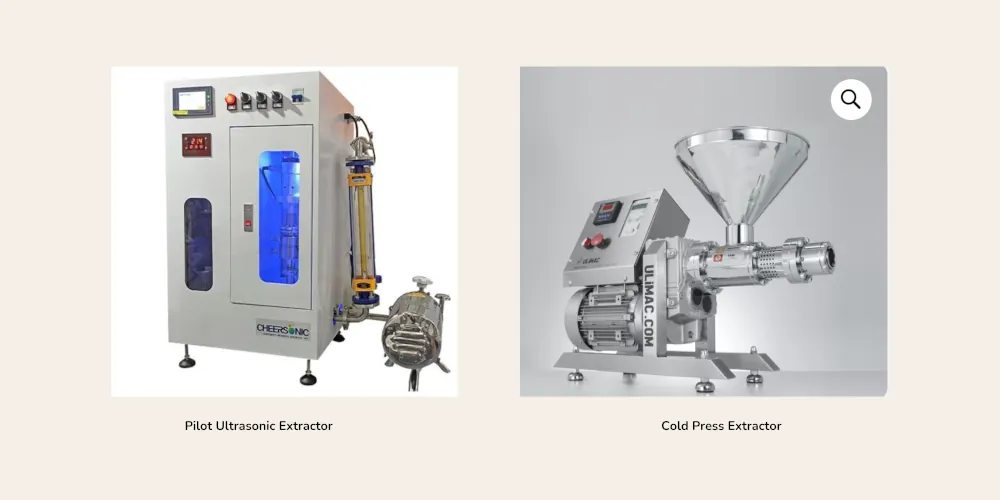
Machines for ingredient processing and extraction involve obtaining and refining raw materials that form the foundation of any cosmetic product. These processes ensure that active ingredients, such as botanical extracts, essential oils, and natural compounds, are isolated and concentrated for use in formulations. Processing and extraction techniques preserve the integrity and potency of any cosmetic ingredients so that they deliver the desired benefits to the skin or hair. These machines are necessary for removing impurities and ensuring consistency in the final product, essential for maintaining quality, safety, and efficacy in cosmetics. Machines: Pilot Ultrasonic Extractor, Cold Press Extractor
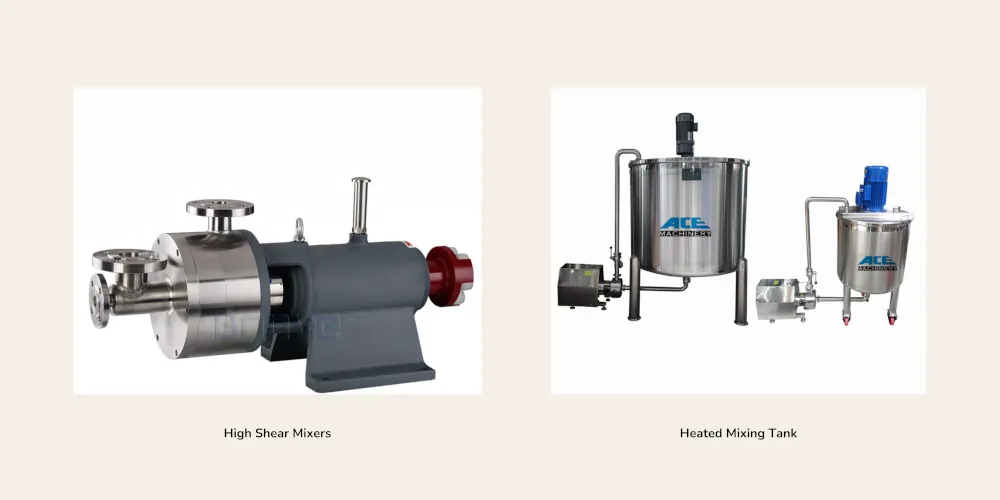
Mixing and Blending machines combine processed and extracted ingredients into a uniform formulation. These machines keep each ingredient evenly dispersed, with consistent texture, viscosity, and stability across the entire batch.
Manufacturers can integrate active ingredients, emulsifiers, and other components by using advanced mixers and blenders. They transform raw materials into a cohesive product, ready for further processing.
Machines: High Shear Mixers, Heated Mixing Tank
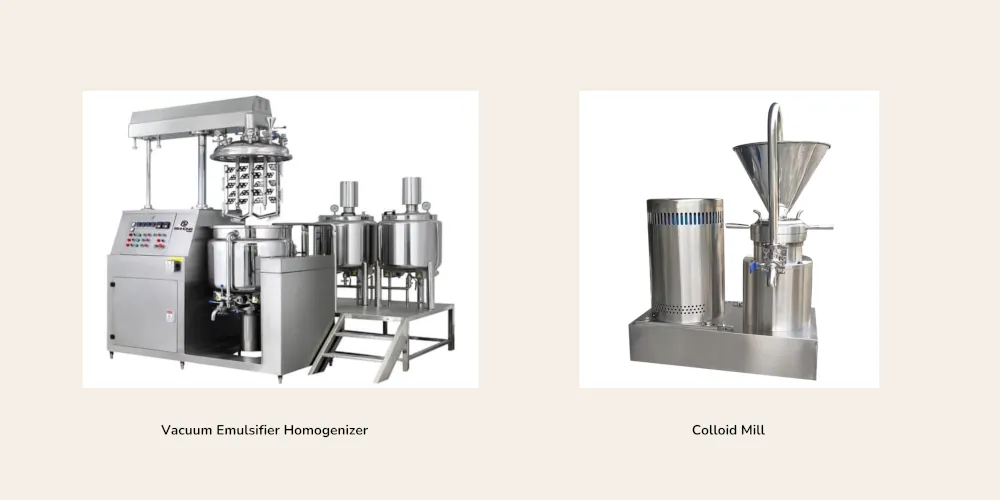
Emulsifying and Homogenizing machines create stable and uniform emulsions by combining oil and water-based ingredients. They apply intense mechanical forces to break down and blend the components at a microscopic level. This machinery ensures that the emulsions remain consistent and do not separate over time.
Emulsifying machines are important for producing creams, lotions, and serums, where a smooth, homogenous texture is necessary for product effectiveness and consumer appeal. Homogenizers refine the mixture, reducing particle size and enhancing the product’s stability, texture, and appearance.
Machines: Vacuum Emulsifier Homogenizer, Colloid Mill
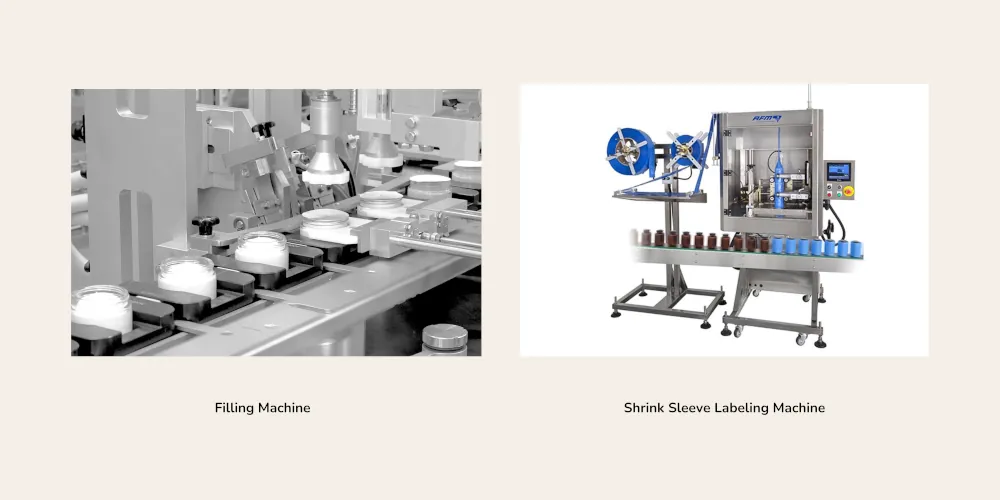
Filling and Packaging machines are responsible for transferring the finished product into its final container and ensuring it is properly sealed and labeled. They dispense amounts of the product into bottles, jars, or tubes, minimizing waste and ensuring consistency across batches.
Packaging machines then seal and label these containers to prepare them for distribution. This equipment maintains product integrity, prevents contamination, and provides a professional appearance. Quality filling and packaging keep the products in perfect condition, meeting both regulatory standards and consumer expectations.
Machines: Filling Machine, Shrink Sleeve Labeling Machine
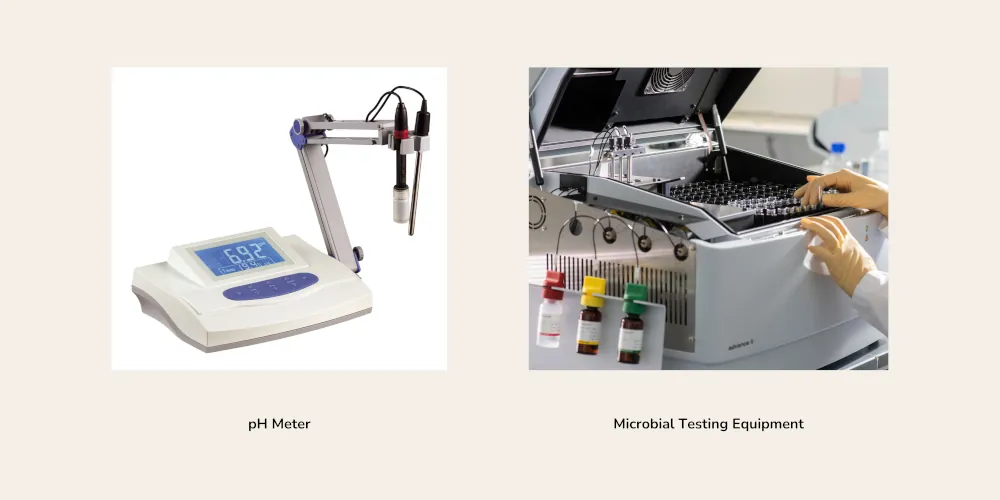
Quality Control and Testing machines are integral to cosmetic production and perform various tests, including measuring pH levels, checking viscosity, and assessing the stability and compatibility of the formulation.
They help detect any deviations or defects in the product, enabling manufacturers to address issues before the products reach consumers. Quality Control and testing machines keep each batch to regulatory requirements and quality benchmarks by providing precise, reliable data.
Machines: pH Meter, Microbial Testing Equipment
ckly absorbed. Ideal for products like serums and hair styling aids.
Imagine an employee working in a cosmetic manufacturing plant who neglects personal hygiene, such as not washing hands properly after handling raw materials. This oversight could lead to product contamination, thus causing potential quality issues.
If the employee touches the equipment or raw ingredients without sanitizing their hands, it could introduce unwanted bacteria or allergens into the production line.
High standards of cleanliness and sanitation are extremely important in cosmetics production. This concerns not only the manufacturing process but also the entire production plant.
The plan should also outline acceptable contamination limits and steps for documentation and reporting. It should immediately ensure that any deviations are addressed promptly and effectively to maintain overall hygiene standards.
Category | Details | Examples |
Inspection Frequency | Daily, Weekly, Monthly | Daily checks of equipment, weekly facility inspections, monthly audits Daily checks of equipment, weekly facility inspections, monthly audits |
Employee Hygiene | Regular checks and cleaning of machinery | Mandatory handwashing, use of gloves and masks, regular health checks |
Equipment Maintenance | Regular checks and cleaning of machinery | Daily wiping down of surfaces, weekly machine disassembly, and cleaning |
Emergency Procedures | Steps to address accidental contamination or equipment malfunction | Immediate shutdown, detailed cleaning, investigation and reporting |
Documentation | Record-keeping of hygiene practices and inspections | Logs of cleaning schedules, inspection reports, and training records |
In 2021, Neutrogena faced a significant recall of its popular sunblock products due to contamination with a potential carcinogen, benzene. The contamination, linked to improper formulation and quality control processes, led to widespread consumer concern and damage to the brand’s reputation. This incident calls for strict control over product composition to ensure consumer safety and trust.
Implementing the special hygiene plans mentioned above is necessary to avoid costly mistakes and ensure product safety. If poor sanitation causes a mistake discovered only after packaging and distributing the batch, the company must recall the entire batch. This recall results in substantial financial losses.
The company faces losses from recall logistics, product disposal, and potential damage to the brand’s reputation, underscoring the financial risks of not maintaining precise ingredient composition.
Manufacturing companies must establish their own laboratories to test each product batch. Employees must follow these standards as well.
Working with the best private label cosmetics manufacturers means having a team that is well-trained and complies with cleanliness and hygiene standards. The staff should have a thorough understanding of cosmetics production and quality control.
ISO 22716 certification signifies the manufacturer’s dedication to these standards. This certification outlines best practices for cosmetics production. It is a must to coordinate with a company that guarantees product consistency, adherence to specifications, and minimization of mix-up risks.
Medpak Solutions prides itself on its commitment to these standards. Our chemists adhere to stringent hygiene regulations to ensure the precision of your cosmetics. Discover how Medpak Solutions can enhance your cosmetic manufacturing process and deliver exceptional results. Contact us today to learn more about our comprehensive services.