
Coco Caprylate — The Secret Behind High-Performance Beauty Products

Have you ever noticed “Coco-Caprylate/Caprate” on your skincare or haircare products and wondered what it actually does? What makes this ingredient stand out in the crowded list of cosmetic additives?
Coco-Caprylate is a lightweight ester that’s gaining attention in the beauty industry for its remarkable ability to hydrate, enhance texture, and improve the overall feel of products.
But what exactly is it, and why is it so effective in delivering smooth, non-greasy results? If you’re curious about how this ingredient works its magic in your favorite beauty products, read on.
What is Coco Caprylate in Skincare?
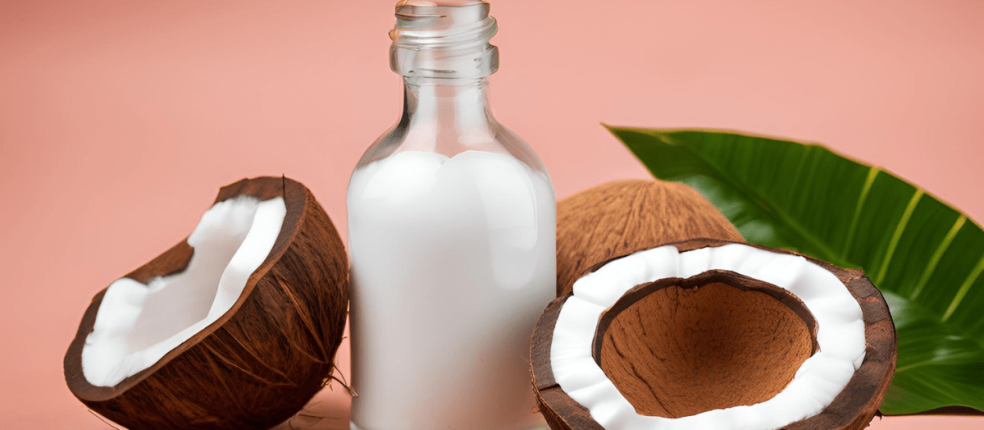
Coco Caprylate is an ingredient found in different skin and hair care products. It is a naturally derived ester obtained from coconut oil, although some variations are sourced from palm oil. This ester is formed through a process called esterification, which involves two transformations.
- First, fatty acids are separated from the original vegetable oil.
- Then, these fatty acids are recombined with fatty alcohols or polyalcohols to create a new compound.
- The result is a compound with a significantly different chemical structure and properties than the original vegetable oil.
The Pioneer of 10-Step Beauty Routine
The famous 10-step beauty routine has evolved since its introduction to the U.S. market. This was once misunderstood as a rigid, literal regimen. “It wasn’t literal,” says David Yi, Good Light Skincare founder. He’s referring to Charlotte Cho’s original concept of showcasing different skincare steps for achieving the Korean beauty look.
Over time, however, routines have simplified. As the representative from the Korean skincare brand, CosRx, explains, “In recent years, there has been a growing movement towards simplified skincare routines, influenced by time constraints, minimalism, and a desire for more streamlined regimens.”
Today, many prefer “no-fuss skincare” with effective, targeted products. This means moving away from extensive layering. Influencers are now promoting simpler routines, often starting with a gentle cleanser, followed by a serum, moisturizer, and sunscreen—ideal for those with sensitive skin.
Technical Data
INCI Name | Coco Caprylate / Caprate |
Chem/IUPAC Name | Alcohols, coco, mixed esters with octanoic and decanoic acids |
CAS Number | 95912-86-0 |
Preservation | Preservative-free |
Usage Rate | 2–25% |
Saponification Value | 190-220 mgKOH/g |
Specific Gravity | 0.856–0.862 |
Refractive Index | 1.436–1.440 |
Other Features | Vegan, Cruelty-free, Non-GMO |
Origin and Composition
The source of Coco Caprylate is coconut oil—native to tropical regions like Indonesia and the Philippines. The ester is formed from caprylic (C8) and capric (C10) acids, which are medium-chain fatty acids that give their unique properties.
These acids are combined with fatty alcohols derived from plant-based sources like palm or palm kernel oil. Once esterified, the product is deodorized and decolorized to meet cosmetic industry standards.
Every cosmetic product manufacturer would agree that the composition is distinct due to the medium chain fatty acids and fatty alcohols. It results in a light, oil-like emollient that is fast-absorbing and non-greasy. This combination provides an emollient effect similar to traditional oils but without the heaviness or oily residue.
What Does Coco Caprylate Do?
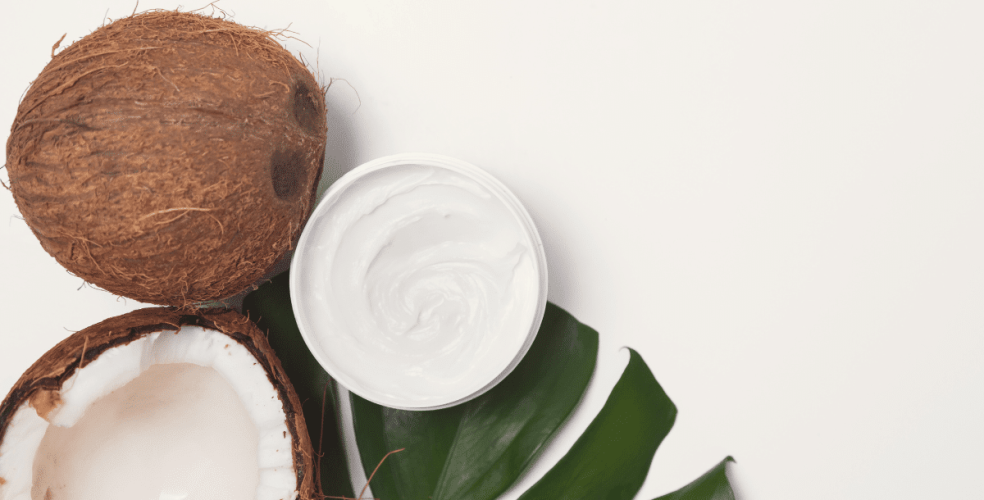
The fluid consistency lets it easily penetrate the skin’s lipid layers to restore moisture and leave the skin soft and healthy. Because it remains liquid at room temperature, Coco Caprylate can be incorporated into formulations without the need for heating.
This is a preferred ingredient by cosmeceuticals companies in products like face creams, sunscreens, foundations, and hair care. It serves as an alternative to heavier oils and mineral-based emollients, with the benefits of moisturization.
Give Your Customers the Hydrating, Silky Skincare They Can’t Resist
- Light Texture & Emollient Properties: Provides smoothness and moisture without the heaviness of traditional oils.
- Oil-Free Formulations: Best for products with matte finishes or for oil-free formulations to ensure hydration without a greasy feel.
- Solvent for Active Ingredients: Disperse sunscreen filters evenly to improve solubility.
- Pigment Dispersion: Works effectively to disperse pigments in color cosmetics for even and smooth color application.
- Enhanced Product Stability: Adds stability to formulations while improving spreadability for a long-lasting, pleasant feel on the skin.
- Hydration: Leaves a light, invisible film that helps maintain moisture over time.
Is Coco Caprylate Safe for Skin?
It is considered safe for use in private-label cosmetics, as it has been extensively evaluated for skin compatibility. Coco Caprylate interacts well with the skin barrier to provide hydration and improve skin texture without causing irritation.
The Cosmetic Ingredient Review Expert Panel reviewed its safety profile and found it safe for use in both leave-on and rinse-off formulas. It is used in concentrations ranging from 0.5% to 62.0% without known adverse effects. It does not pose any risks to humans or the environment.
Which Skincare Products Feature This Ingredient?
Skincare | Moisturizers, face creams, eye contour creams, sunscreens, and body lotions |
Haircare | Lightweight hair serums, conditioners, and styling products. |
Makeup | Foundations, tinted concealers, and makeup removers |
Color Cosmetics | Products like lipsticks, blushes, and eyeshadows, where it aids in pigment dispersion and smooth application. |
Cleansing | Body cleansers and facial cleansers for gentle hydration |
Unlock the Potential of Coco Caprylate in Your Formulations
If you’re looking to incorporate Coco Caprylate into your product line, our expertise in cosmetic manufacturing guarantees high-quality products with effective and safe ingredients.
Want to stay ahead in beauty? Contact Medpak Solutions and let’s bring the latest skincare trends to your products.
Table of Contents

Frequently Asked Questions
Is coco caprylate the same as coconut oil?
No, Coco Caprylate is derived from coconut oil, but it is a processed ester. While both share similar moisturizing properties, the former is lighter, fast-absorbing, and non-greasy. It’s suitable for cosmetic formulations compared to the heavier texture of pure coconut oil.
Is coco caprylate comedogenic?
It is not considered comedogenic since it’s lightweight and fast-absorbing. This means it won’t clog pores, which is suitable for oily or acne-prone skin types. It provides hydration without the risk of causing breakouts or skin congestion, unlike heavier oils that may contribute to pore blockages.
Is coco caprylate a silicone?
No, it is not silicone. It’s a natural ester that offers similar benefits to silicones in formulations, such as smooth texture and lightweight hydration. It is plant-based and does not have the chemical structure of traditional silicones.
What is a good alternative to Coco Caprylate?
A good alternative is Caprylic/Capric Triglyceride, which is another lightweight, fast-absorbing emollient made from coconut oil. It provides similar hydration and smoothness without a greasy finish. This is a suitable replacement in formulations aiming for light, non-comedogenic texture.